


Golf Scoring Explained: Par, Birdie, Bogey & Beyond
Golf Scoring Explained: Par, Birdie, Bogey & Beyond

Golf scoring explained simply: count your strokes, compare them to the target for each hole, and lower is better. Golf scoring sounds confusing from the outside — birdies, bogeys, pars — but the underlying idea is that simple.
Golf Scoring Explained: What “Par” Actually Means
Par is the number of strokes a skilled golfer is expected to need to complete a hole, including two putts. Most holes are par 3, 4, or 5, based on their length and difficulty. An 18-hole course typically totals somewhere around par 70–72.
The Scoring Terms, Explained
- Birdie — one stroke under par (a 3 on a par-4 hole)
- Eagle — two strokes under par (a 2 on a par-4, or a 3 on a par-5)
- Albatross — three strokes under par (rare — a 2 on a par-5)
- Par — matching the target exactly
- Bogey — one stroke over par
- Double bogey — two strokes over par
- Triple bogey (and beyond) — three or more strokes over par; usually just called by the number at that point
For a beginner, don’t be discouraged by regularly scoring bogey or double bogey — that’s completely normal while you’re learning, and most recreational golfers never consistently shoot par.
Stroke Play vs. Match Play
Stroke play is the most common format — total up every stroke across all 18 holes, lowest total score wins. This is what you’ll play in almost every casual and most tournament rounds.
Match play scores hole-by-hole instead of by total strokes — whoever takes fewer strokes wins that hole, and the match is decided by how many holes you’re ahead, not your overall stroke total. This shows up more in tournament formats than casual rounds.
Reading a Scorecard
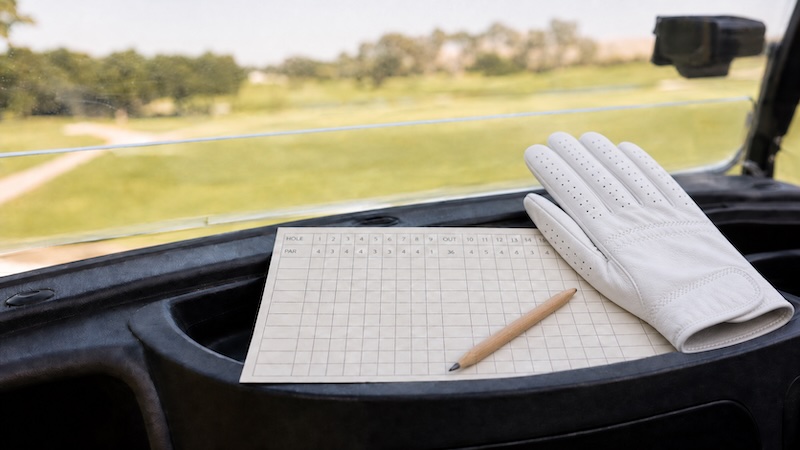
A scorecard lists each hole’s par and yardage, with rows for each player to write their stroke count per hole. At the end, you total each column. Many scorecards also list the hole’s handicap rating (its relative difficulty, 1–18), which matters more for handicap and match play formats than for a casual round.
What’s a Handicap, Briefly
A handicap is a number representing a golfer’s skill level relative to par, used to make scoring fair between players of different abilities in competitive formats. As a beginner, you don’t need one for casual rounds — it becomes relevant if you start playing in club events or tournaments regularly. The USGA’s official handicapping resources cover the full World Handicap System if you want the complete picture.
FAQ
Is it bad to score bogey or worse on most holes as a beginner?
Not at all — it’s completely normal. Most recreational golfers score well above par on the majority of holes; scoring pressure eases the more you play.
What’s the difference between stroke play and match play?
Stroke play totals every stroke across 18 holes; match play is decided hole-by-hole based on who takes fewer strokes on each individual hole.
Do I need to track my handicap as a beginner?
No — it only really matters once you’re playing in more competitive or club settings.
Why do some holes count more than others in scoring?
They don’t count “more” in stroke play — every stroke counts equally toward your total. The handicap rating on a scorecard is about relative difficulty, mainly relevant for match play and handicap calculations.
Bottom Line
Par is the target, birdies and eagles are under it, bogeys are over it — and none of it matters as much as just playing and improving over time. Once scoring makes sense, the actual rules and common golf terms tend to click faster too.
Responses (0)
More from Golf Gummies

Best Supplements for a 36-Hole Golf Day
A 36-hole day is a different animal than your standard weekend round. You’re not just…

How Much Do Golf Gummies Cost? A Price Breakdown
Golf Gummies run $39.95 for a 20-count bag, or $9.99 for a 5-count sample pack…

Types of Golf Chewable Supplements, Compared
Golf chewable supplements aren’t one category — “chewable” just describes the format, and the actual…
Do Golf Gummies Really Work? An Honest Look
Reasonable question, and the honest answer is: it depends what “work” means. If you’re expecting…

No responses yet. Be the first to share your thoughts!